Zeno Power tested a 20-watt underwater Stirling generator off Washington state
Zeno Power completed a two-week underwater test of a Stirling generator off the coast of Washington state, producing more than 20 watts of electrical power. The prototype was heated by an electric heater, not by radioactive material. The company plans to replace it with strontium-90 recovered from spent nuclear fuel and to test a radioisotope heat source in a water tank in 2027, followed by a possible seabed deployment later that year. The program is supported by the US Department of Defense.
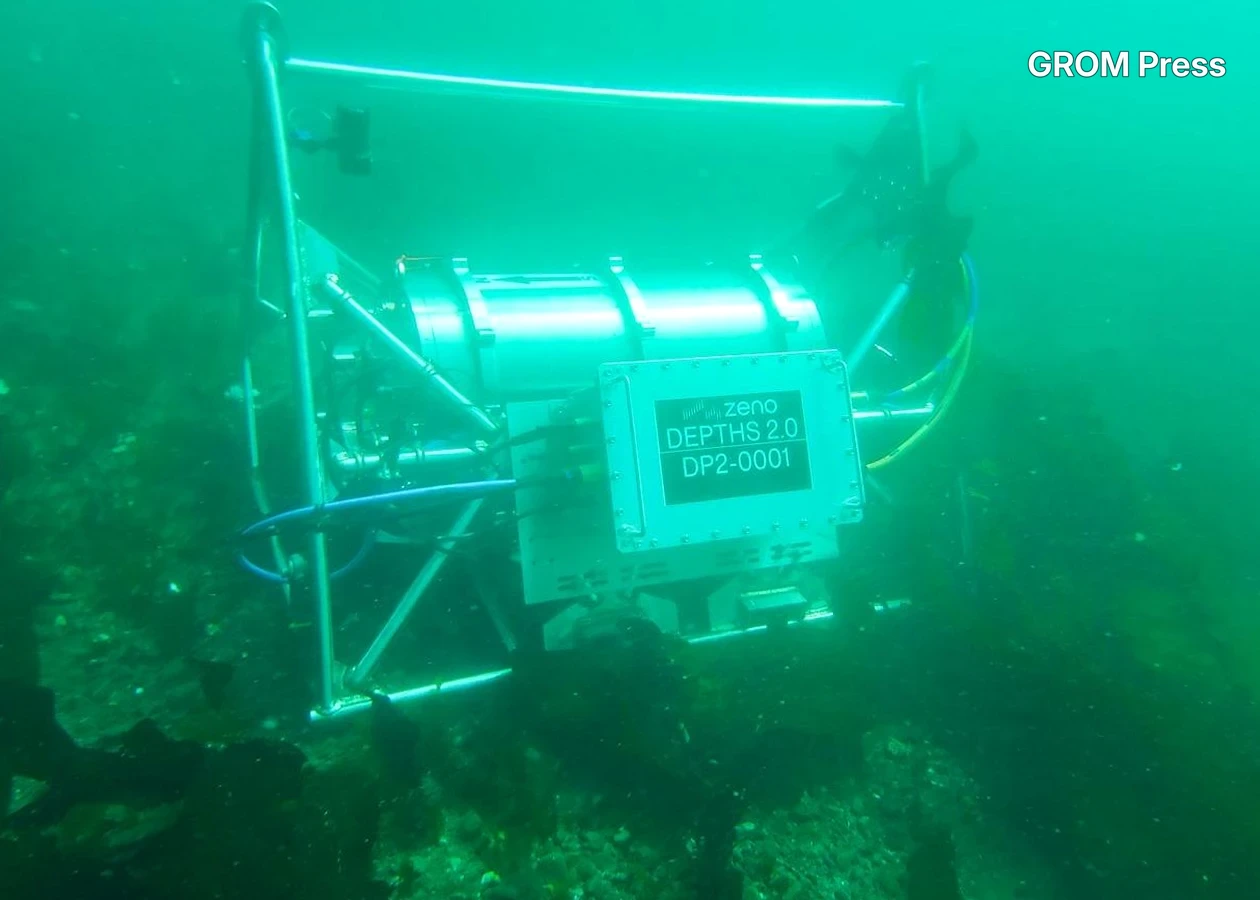
Zeno Power, a US startup founded in 2018, announced that it completed a two-week test of an underwater Stirling generator in a marine environment off the coast of Washington state. The company reported that the installation produced more than 20 watts of electrical power during the test. The test is described as an important step in developing compact power sources that could supply underwater equipment for years without maintenance or battery replacement.
The tested prototype was not nuclear. Heat for the generator was supplied by an electric heater. In a future version, the heater is to be replaced by strontium-90, a radioactive isotope that can be extracted from spent nuclear fuel. As the isotope decays, it releases heat that the generator would convert into electricity. Zeno Power uses a Stirling engine, in which gas in a closed cylinder is alternately heated and cooled, moving a piston and producing mechanical work that is then converted into electrical energy. The company claims that its radioisotope batteries could be at least four times more efficient than traditional radioisotope thermoelectric generators used, in particular, on spacecraft.
Potential applications described by the company include underwater sensor networks monitoring marine infrastructure and autonomous underwater vehicles. These systems require relatively low power, but reliability and long-term operation without access to maintenance are critical. Zeno Power describes the envisioned system as a slow charging station for underwater vehicles installed on the seabed.
The next stage is scheduled for 2027. The company intends to install a radioisotope heat source in the generator and test it in a water tank under controlled laboratory conditions. If that test is successful, Zeno Power expects to deploy for the first time a working system with a radioactive energy source on the seabed later in the same year.
Development is supported by the US Department of Defense. In 2023, the startup received its first Pentagon contract worth $7.5 million. Since its founding in 2018, Zeno Power has raised $105 million in private investment and signed contracts with the Pentagon and NASA totaling $60 million.
Source: GROM.PRESS